
 Jee Ltd
Summary
Offshore pipeline failure can arise from internal or external corrosion, mechanical damage, fatigue, free spans and seabed interaction, design or installation issues, and external interference. For ageing assets, operators also need to understand how degradation is progressing and whether the pipeline remains fit for continued operation.
The most effective approach is not simply to inspect more often. A strong PIMS connects asset information, threat and risk assessment, inspection and monitoring, corrosion control, ILI data, engineering assessment, anomaly management, remaining-life assessment, life-extension decisions and emergency response.
Technology can strengthen that process. Modern pipeline integrity software can reduce data silos; AI and machine learning can assist with inspection comparison and trend identification; digital asset models can improve visibility of asset condition; and newer inspection techniques can provide richer subsea information. These technologies should support—not replace—engineering judgement and assurance.
1. What causes offshore pipeline failure?
Answer: The main causes are corrosion, mechanical damage, fatigue and seabed interaction, design or installation defects, and external interference. The relative importance of each threat depends on the pipeline and its operating environment.
Corrosion
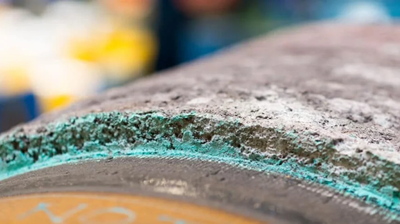
Corrosion remains one of the most important integrity threats to offshore pipelines. Internal corrosion can result from water, corrosive fluids, contaminants and production conditions, while external corrosion is commonly associated with coating degradation and reduced cathodic protection (CP) performance.
- General corrosion
- Localised corrosion and pitting
- Corrosion fatigue
- Stress corrosion cracking
Effective corrosion management combines prevention, monitoring and engineering assessment to control degradation and support safe asset life.
Mechanical damage and external interference
Fishing activity, anchor interaction, dropped objects and offshore construction can damage subsea pipelines. The pipeline threat assessment should identify credible sources of external interference and define appropriate inspection, protection and response measures.
Fatigue, free spans and seabed interaction
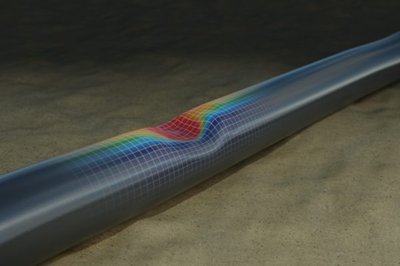
Repeated pressure, temperature and environmental loading can contribute to fatigue damage. Free spans, seabed movement, scour and pipeline–seabed interaction can introduce additional stresses and should be reflected in inspection and monitoring requirements.
Design and installation issues
Integrity challenges can originate before a pipeline enters service. Poor route engineering, inadequate protection, installation defects or incomplete design assurance can create weaknesses that become more significant as the asset ages.
Emerging external and security threats
Operators of critical subsea infrastructure should also consider deliberate interference and wider hybrid threats where relevant to their asset and operating environment. This sits alongside conventional external-interference risks and requires coordination between integrity, operations, security and emergency-response functions.
2. What is a Pipeline Integrity Management System (PIMS)?
Answer: A PIMS is the structured framework used to manage pipeline integrity throughout the asset lifecycle. It brings together asset data, threat assessment, inspection, monitoring, engineering assessment, anomaly management, emergency response and continuous improvement.
A PIMS provides the organising structure for the activities described throughout this guide. It should be proportionate to the asset, kept current as operating conditions and inspection evidence change, and clear about who owns each integrity decision.
A practical offshore PIMS should connect:
- Design, construction, material and operating information
- Threat identification and risk assessment
- Inspection and monitoring plans
- Corrosion management and CP performance
- ILI and subsea inspection data
- Defect assessment, fitness-for-service and remaining-life calculations
- Anomaly management and change control
- Emergency response and repair preparedness
- Roles, responsibilities, reporting and lessons learned
3. How should offshore pipelines be inspected in 2026?
Answer: Inspection should be risk-based: the method, frequency and coverage should reflect credible degradation mechanisms, pipeline condition, operating history, accessibility and the engineering decision the inspection needs to support.
Established inspection and monitoring methods
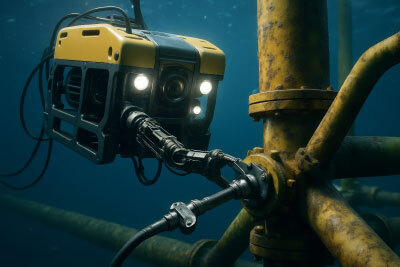
- ROV-based visual inspection
- Cathodic protection surveys
- Pipeline exposure and free-span assessments
- Route and seabed surveys
- Fluid sampling and testing
- Chemical injection and corrosion-control monitoring
- Pressure, temperature and flow trend monitoring
- In-line inspection (ILI) for suitable piggable pipelines
Newer inspection and data-collection technologies
Depending on the survey objective, operators can supplement established techniques with autonomous underwater vehicles (AUVs), uncrewed ROV systems, photogrammetry and laser scanning. These approaches can increase survey coverage or produce higher-resolution spatial information, but their value should be assessed against the integrity decision required.
ILI and intelligent pigging
For piggable pipelines, ILI can provide information on corrosion, cracking, deformation and other defects. Common technologies include magnetic flux leakage (MFL), ultrasonic inspection and geometry tools. Tool selection should reflect pipeline geometry, defect threats, operating conditions and the quality of data required for subsequent engineering assessment.
4. How can AI and digital technology improve pipeline integrity?
Answer: Digital technology can help integrity teams bring inspection, operational and risk information together, while AI and machine learning can assist with comparison, pattern recognition, prioritisation and predictive analysis. Safety-critical outputs still require engineering validation.
Pipeline integrity management software
Integrity platforms can provide a structured system of record for inspection, corrosion, operational and risk information. Jee has a strategic partnership with Irth Solutions, combining Irth's Asset Integrity for Pipelines (AIP) software with Jee's engineering expertise. This illustrates the value of combining a digital integrity platform with engineering interpretation and decision-making.
Relevant Jee insight: Irth Solutions and Jee strategic partnership
AI-assisted analysis and predictive models
AI and machine learning can support tasks such as comparing inspection datasets, identifying trends in process data, prioritising anomalies and developing predictive indicators. The appropriate role of AI is to reduce manual data handling and surface information for engineering review, rather than to remove accountability from integrity decisions.
Digital asset models and digital twins
Digital asset models can bring design, inspection, operational and spatial information together in a more accessible representation of the pipeline. When kept current, they can support scenario analysis, integrity planning, change management and communication between engineering and operations teams.
5. How should operators manage corrosion and pipeline defects?
Answer: Operators should combine corrosion prevention, inspection and monitoring with engineering assessment so that identified degradation leads to a documented integrity decision.
Corrosion management
Corrosion control may include appropriate material selection, coatings, CP systems, corrosion inhibitors, water management, chemical treatment and corrosion monitoring. The effectiveness of these controls should be reviewed as operating conditions and degradation evidence change.
Fitness-for-service assessment
When a defect is identified, a fitness-for-service assessment determines whether the pipeline can continue to operate within defined acceptance criteria and what action is required. Factors can include defect severity, remaining wall thickness, operating conditions and future degradation.
Remaining-life assessment
Remaining-life assessment uses inspection findings, degradation or corrosion growth rates and operating information to estimate how long an asset can continue to operate safely. It supports decisions on inspection intervals, mitigation, repair, replacement and investment.
6. How can operators extend the life of ageing offshore pipelines?
Answer: Life extension should be evidence-led: establish the current integrity position, identify time-dependent degradation mechanisms, assess the risks over the proposed extended period, and define the inspection, monitoring and mitigation measures needed to maintain fitness for service.
ISO 12747:2025 provides updated guidance and requirements for pipeline life extension. Jee's Technical Authority, Graham Wilson, served as convenor of the ISO working group that developed the standard. Jee also applies structured life-extension assessment methods to ageing subsea pipelines.
Relevant Jee insight: ISO 12747:2025 – shaping the future of pipeline life extension
Relevant Jee case study: North Sea pipelines lifetime extension study
7. What should an emergency pipeline response plan include?
Answer: Operators should prepare for failure before it occurs by identifying credible failure modes, pre-assessing repair strategies and maintaining the equipment, spares, logistics and specialist support needed for rapid intervention.
An Emergency Pipeline Preparedness Response Scheme can form part of this preparedness. The objective is to reduce decision time during an incident by turning likely failure scenarios into practical response plans.
- Credible failure modes and likely consequences
- Detection, verification and escalation arrangements
- Isolation, shutdown and safe-state procedures
- Roles, responsibilities and communications
- Potential repair methods and engineering prerequisites
- Availability and condition of critical repair equipment and spares
- Vessels, logistics, specialist contractors and offshore access
- Environmental response and regulatory notification requirements
- Post-incident investigation and lessons learned
Repair strategies and equipment requirements should be reviewed when the pipeline configuration, operating envelope or integrity position changes.
8. How can operators manage external interference and security threats?
Answer: Treat security-related damage as part of the wider pipeline risk picture where credible, while maintaining the same engineering discipline used for other external-interference threats.
- Map critical assets and identify high-consequence sections
- Maintain current route, seabed and asset information
- Use appropriate inspection and monitoring to identify changes or damage
- Define escalation thresholds for unusual activity or suspected interference
- Coordinate integrity, operations, security and emergency-response functions
- Maintain practical repair and intervention strategies for credible damage scenarios
9. Offshore pipeline integrity checklist for 2026
A mature integrity programme should be able to answer “yes” to the following questions:
- Do we have a current Pipeline Integrity Management System (PIMS)?
- Have we identified credible internal, external, structural, environmental and external-interference threats?
- Is inspection frequency and method driven by risk and degradation mechanisms?
- Can current ILI and subsea inspection results be reconciled with historical data?
- Are corrosion rates and other degradation trends understood well enough to support decisions?
- Do identified anomalies have a documented engineering disposition?
- Do we have a defensible fitness-for-service and remaining-life position for ageing assets?
- Are digital tools reducing data silos and improving traceability?
- Have we assessed whether newer inspection technologies could add value?
- Do we have an emergency response and repair strategy for credible failure scenarios?
- Are integrity, operations, security and emergency-response teams working from consistent asset information?
10. How Jee can help prevent offshore pipeline failure
Answer: Jee provides independent engineering expertise across pipeline integrity, subsea engineering, inspection, pigging, life extension and related asset-lifecycle decisions.
Jee can support operators with:
- Pipeline Integrity Management Systems (PIMS)
- Risk-based integrity management and assessment
- Fitness-for-service and defect assessment
- Remaining-life and lifetime-extension assessment
- Corrosion management and cathodic protection assessment
- Inspection planning, ILI support and technical interpretation
- Pigging and inspection campaign engineering and technical assurance
- Emergency response and repair preparedness
- Subsea engineering and design assurance
Jee's published work includes subsea pipeline life-extension assessments and end-to-end ILI support covering inspection planning, offshore execution, inspection-data review, corrosion-growth assessment and remnant-life evaluation.
For more information, visit Integrity Management services or Pigging services.
To contact Jee’s Technical Authority, Graham Wilson, email Graham.Wilson@jee.co.uk.
Frequently asked questions
What is the most common cause of offshore pipeline failure?
Corrosion is one of the most important integrity threats, but failures can also result from mechanical damage, fatigue, seabed interaction, design or installation defects and external interference. The relevant threats should be established through a pipeline-specific risk assessment.
How can offshore pipeline failure be prevented?
Use a lifecycle PIMS that combines risk-based inspection, corrosion control, monitoring, engineering assessment, anomaly management, life assessment and emergency preparedness.
What is a PIMS for an offshore pipeline?
A PIMS is the structured framework for managing pipeline integrity throughout its lifecycle. It links asset information, threat and risk assessment, inspection, monitoring, engineering assessment, emergency response and reporting.
How does AI help pipeline integrity management?
AI and machine learning can assist with comparing inspection datasets, identifying trends in process data, prioritising anomalies and supporting predictive analysis. Safety-critical outputs still require appropriate validation and engineering judgement.
What new technologies are being used for subsea pipeline inspection?
Depending on the objective, operators can use advanced ILI tools, AUVs, uncrewed ROV systems, photogrammetry and laser scanning, supported by digital data platforms. The right technology depends on the asset, threat and engineering decision required.
How is remaining life assessed for a subsea pipeline?
Remaining life is estimated using inspection results, degradation or corrosion growth rates, fatigue and operating data, together with the applicable engineering assessment methodology and acceptance criteria.
How can operators prepare for an offshore pipeline failure?
Prepare an emergency response and repair strategy in advance. Identify credible failure modes, define escalation and isolation procedures, pre-assess repair options, and maintain access to the equipment, vessels and specialist support needed for intervention.
How can ageing offshore pipelines be kept in service safely?
Use current inspection and operational evidence to establish integrity condition, assess time-dependent degradation, complete fitness-for-service and remaining-life assessments, and update the PIMS and inspection strategy for extended operation.
How does Jee support offshore pipeline integrity?
Jee provides PIMS, risk-based integrity management, fitness-for-service and defect assessment, remaining-life and lifetime-extension studies, corrosion and CP assessment, inspection and ILI support, pigging engineering and related subsea engineering services.
For more information, visit www.jee.co.uk/integrity-management
To contact Jee’s Technical Authority, Graham Wilson, email Graham.Wilson@jee.co.uk.