
 Jee Ltd
Summary
A practical guide for oil and gas operators on pipeline corrosion risk assessment. This article explains how corrosion monitoring, risk assessment methods and pipeline integrity strategies work together to manage ageing asset challenges across offshore and onshore infrastructure.
It also explains where operators can gain more value from modern integrity practice: predictive modelling, AI supported data alignment, material selection, polymer liners and risk based planning that converts inspection data into defensible decisions.
Why pipeline corrosion risk assessment matters
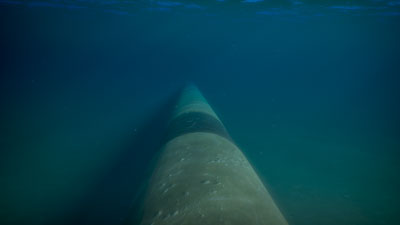
Pipeline corrosion remains one of the most significant threats to ageing oil and gas infrastructure. As assets operate beyond their original design life, corrosion related degradation becomes more likely and more complex to manage.
In 2026, operators are facing rising cost pressure, resource constraints and increasing expectations around reliability. This creates a need for structured and efficient pipeline integrity strategies that reduce risk without increasing operational burden.
A robust pipeline corrosion risk assessment approach allows operators to move from reactive maintenance to planned and prioritised decision making.
The added challenge is data complexity. Many operators now manage mixed inspection histories, different in line inspection vendors, non piggable pipelines, evolving production conditions and incomplete historical records. Corrosion risk assessment therefore needs to do more than list threats. It must provide a clear engineering basis for where to inspect, when to intervene and how confidently an asset can continue operating.
Understanding corrosion in ageing pipelines
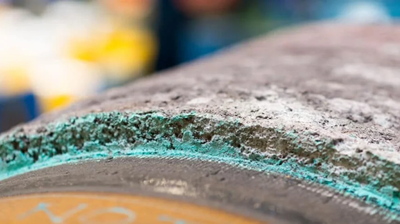
Corrosion is a progressive degradation mechanism that can affect both the internal and external surfaces of pipelines. Understanding the underlying causes is essential for effective integrity management.
Internal corrosion
Internal corrosion is influenced by fluid composition, operating conditions and production chemistry.
Common mechanisms include:
- Carbon dioxide corrosion
- Hydrogen sulphide corrosion
- Microbiologically influenced corrosion
- Erosion corrosion caused by sand production or high flow velocities
Water content, contaminants and changing production conditions can all accelerate degradation over time.
For ageing pipelines, internal corrosion risk can also change as water cut increases, new tie ins alter flow behaviour or a pipeline is preserved, idled or repurposed. These changes can affect inhibitor coverage, liquid hold up, solids deposition and the locations where corrosion is most likely to initiate.
External corrosion
External corrosion is typically linked to environmental exposure and the effectiveness of protection systems.
Key factors include:
• Coating degradation
• Cathodic protection performance
• Mechanical damage to protective systems
• Long-term environmental exposure
As pipelines age, the effectiveness of these protective barriers can decline, increasing corrosion risk.
External corrosion assessment should consider how coating condition, cathodic protection data, seabed exposure, burial condition and interference risks interact. A weakness in one barrier does not always indicate an immediate integrity concern, but it should trigger a proportionate review of likelihood, consequence and available inspection evidence.
Ageing asset considerations
Ageing infrastructure often presents additional challenges, including degraded coatings, historical anomalies and changing operating conditions compared with original design assumptions.
Effective ageing asset management requires an understanding of how these factors influence future degradation and remaining life.
The most useful assessments connect current condition to future operation. That means asking whether corrosion rates are stable, whether the original corrosion allowance remains appropriate, whether mitigation remains effective and whether the asset has a credible life extension or change of duty case.
Corrosion monitoring strategies that support integrity
Corrosion monitoring forms the foundation of pipeline corrosion risk assessment. Without reliable condition data, accurate risk evaluation is difficult.
Inspection and monitoring techniques
Modern monitoring programmes combine inspection technologies with engineering analysis to identify degradation and track changes over time.
Common techniques include:
- Ultrasonic thickness measurements
- Visual inspection
- Cathodic protection surveys
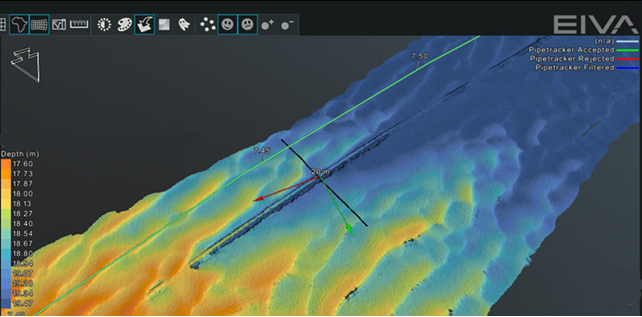
- Remotely operated vehicle inspection for offshore assets
- Magnetic flux leakage tools
- Ultrasonic inspection tools
- Acoustic resonance technology
- Geometry pigs
For pipelines that can accommodate in line inspection, operators may also use:
These methods help identify corrosion, wall loss and other integrity threats before they become critical.
The value of inspection increases when each technique is selected against a defined threat. Tool choice should reflect expected defect type, defect orientation, wall thickness, access constraints, fluid service, previous inspection quality and the level of certainty needed for the next integrity decision.
Corrosion monitoring tools
Operators may also use corrosion monitoring systems such as:
- Corrosion coupons
- Electrical resistance probes
- Water chemistry monitoring
These tools provide valuable information about active corrosion mechanisms and degradation rates.
Enhanced monitoring may include improved data capture from chemical injection performance, produced water chemistry, microbial sampling, cathodic protection trends and operational parameters. These datasets help engineers validate whether corrosion control measures are performing as expected.
Defect assessment
Monitoring activities should do more than identify defects. Engineers must assess defect size, location and growth trends to determine their significance.
This information provides the basis for risk assessment and future integrity planning.
For large inspection datasets, manual defect matching can become time consuming and inconsistent. AI supported data alignment and automated run comparison can help engineers compare inspection histories, identify credible corrosion growth and focus technical review on the features that matter most.
Using predictive models and AI supported integrity data
Predictive corrosion assessment combines engineering judgement, inspection data, operating history and degradation modelling to estimate how risk may change over time. This is where corrosion risk assessment becomes more valuable than a point in time inspection review.
Predictive models can support:
- Corrosion growth rate estimation using matched inspection features and operational data
- Remaining life forecasting for individual defects, pipeline segments or asset portfolios
- Inspection interval planning based on uncertainty, consequence and mitigation performance
- Sensitivity checks where data quality is poor or production conditions are changing
- Prioritisation of engineering effort across large asset populations
AI and machine learning should not replace engineering assessment. Their value is in improving data handling, run comparison, anomaly alignment and pattern recognition so that engineers can spend more time validating critical findings and making defensible integrity decisions.
Evaluating corrosion risk
A reliable pipeline corrosion risk assessment combines monitoring data with structured risk analysis.
Likelihood of failure
Likelihood is influenced by factors such as:
- Corrosion growth rates
- Defect dimensions
- Coating condition
- Cathodic protection performance
- Operating conditions
Understanding these factors helps operators predict future degradation and identify where intervention may be required.
Likelihood should also account for uncertainty. Poor inspection repeatability, unverified corrosion rates, changing inhibitor reliability or incomplete operating history all increase uncertainty and may justify more conservative assessment assumptions.
Consequence of failure
Consequence assessment considers the potential impact of a failure, including:
Assets with high consequences of failure often require more conservative integrity management approaches.
Risk based assessment
Risk based approaches combine likelihood and consequence to prioritise inspection, monitoring and maintenance activities.
This allows operators to focus resources on the highest risk areas while avoiding unnecessary intervention elsewhere.
A strong risk based approach should be transparent enough for technical authorities, asset managers and regulators to understand why a specific inspection interval, repair window or life extension decision has been recommended.
Material selection and corrosion mitigation choices
Corrosion risk management is not limited to inspection and monitoring. For new pipelines, reroutes, repairs or repurposing projects, material selection can significantly affect future integrity risk and lifecycle cost.
Options may include corrosion allowance, inhibition, cathodic protection, coatings, corrosion resistant alloy materials, clad pipe and internal liners. Plastic polymer liners can provide internal corrosion resistance in suitable lower temperature services, while CRA or clad solutions may be more appropriate where higher temperature, gas service or more severe corrosion conditions are expected.
The right option depends on service chemistry, pressure, temperature, flow assurance requirements, installation method, accessibility, operability, inspection strategy and cost. A technically attractive option may not be the best lifecycle choice if it introduces new failure modes, repair constraints or supply chain risk.
For ageing pipelines, material selection also matters during repair and life extension. Replacement spools, clamp materials, liner compatibility, welding requirements and future change of duty should be assessed together rather than as isolated decisions.
Corrosion growth and remaining life assessment
Assessing current condition is only part of the process. Operators must also understand how corrosion is likely to develop in the future.
Corrosion rate assessments use inspection findings, monitoring data and operating information to estimate future degradation.
These assessments support:
- Remaining life calculations
- Inspection interval planning
- Maintenance prioritisation
- Life extension decision making
Understanding future risk is essential for effective long term asset management.
Where inspection data is limited or inconsistent, engineers should clearly document the assumptions used for corrosion rate selection. Best estimate and conservative upper bound rates can help operators understand both expected performance and the sensitivity of future integrity decisions.
Fitness for service assessment
When corrosion defects are identified, operators must determine whether the pipeline can continue operating safely.
Fitness for service assessments evaluate factors such as:
- Defect dimensions
- Remaining wall thickness
- Operating pressure
- Future corrosion growth
The results help determine whether continued operation is acceptable, enhanced monitoring is required or repair and replacement activities should be considered.
Fitness for service assessments are a key component of risk informed integrity management.
For complex defects, interacting corrosion, deep pits, long axial defects or unusual loading, more detailed assessment methods may be appropriate. These can include advanced defect assessment, finite element analysis or engineering critical assessment where justified by the integrity question.
From assessment to integrity planning
The value of corrosion risk assessment lies in how it informs practical integrity management activities.
Assessment outputs should feed into structured integrity management plans that define:
- Inspection intervals
- Monitoring requirements
- Corrosion mitigation activities
- Maintenance priorities
For ageing assets, these plans help balance safety, performance and cost while supporting life extension objectives.
A good plan also defines triggers for reassessment. These may include a material change in operating conditions, inhibitor availability, cathodic protection performance, repair history, inspection findings or life extension requirements.
Building a portfolio view of corrosion risk
Many operators manage large portfolios of ageing pipelines rather than individual assets. The priority is not simply to inspect more often. It is to build a consistent view of which assets present the greatest risk and which decisions need senior engineering input first.
Common portfolio challenges include:
- Ageing infrastructure
- Inspection backlogs
- Limited engineering resources
- Inconsistent historical data
- Pressure to extend asset life while controlling cost
- Different inspection vendors, data formats and defect naming conventions
A portfolio approach links corrosion threats, inspection evidence, defect assessment, operational conditions and consequence ranking into a single decision framework. This helps operators direct scarce engineering capacity to the assets where intervention, reassessment or improved monitoring will have the greatest impact.
Best practice for pipeline corrosion risk assessment
To manage corrosion risk effectively, operators should focus on:
- Implementing integrated corrosion monitoring and inspection programmes
- Understanding the corrosion mechanisms affecting each asset
- Using risk based assessment methods to prioritise resources
- Tracking corrosion growth rates and remaining life
- Applying consistent fitness for service methodologies
- Maintaining accurate and accessible integrity data
- Planning proactively for late life operation and life extension scenarios
This approach supports more predictable performance and reduces the likelihood of unexpected failures.
Operators should also consider how digital integrity platforms, AI supported data matching and predictive modelling can improve consistency across large datasets. The purpose is not technology for its own sake. The purpose is faster access to reliable evidence, clearer engineering decisions and better use of limited specialist capacity.
How Jee supports corrosion risk assessment and pipeline integrity
Jee supports operators with practical engineering solutions for pipeline corrosion risk assessment and integrity management.
Our approach combines technical expertise with a clear understanding of the challenges associated with ageing infrastructure, resource constraints and life extension programmes.
Jee provides:
- Corrosion risk assessment and integrity strategy development
- Fitness for service assessment and anomaly evaluation
- Remaining life assessment and life extension support
- Risk based inspection planning
- Pipeline integrity management systems and lifecycle strategies
- Engineering assurance and technical capability development
Jee also supports operators with corrosion growth modelling, direct assessment, material selection, digital integrity workflows and interpretation of complex inspection datasets. Where appropriate, we help integrate software enabled analysis with independent engineering judgement so outputs remain practical, traceable and defensible.
Our work helps operators maintain safe and reliable infrastructure while managing cost, uncertainty and operational risk.
Final thoughts
Pipeline corrosion risk assessment is a critical part of managing ageing oil and gas infrastructure in 2026.
By combining corrosion monitoring, structured risk assessment methods and robust pipeline integrity planning, operators can reduce uncertainty and make more informed decisions about asset performance.
The greatest value comes when corrosion risk assessment links today’s data to tomorrow’s decisions. Predictive models, AI supported data alignment, fit for purpose material choices and disciplined engineering review all help operators move beyond generic integrity management and make clearer life extension, inspection and intervention decisions.
In a market defined by ageing assets and increasing operational pressures, the ability to turn inspection data into clear, risk based decisions is what separates reactive maintenance from proactive and sustainable asset management.
For more information, visit www.jee.co.uk/integrity-management
To contact Jee’s Technical Authority, Graham Wilson, email Graham.Wilson@jee.co.uk.