Summary
A Mediterranean offshore gas development required specialist integrity engineering support to support the continued operation of a complex pipeline network comprising a 109 km offshore 18" multiphase export pipeline, a 16 km onshore gas export pipeline, and two 6” LPG export pipelines. The operator sought to review the integrity status of these assets, assess recently identified anomalies, and develop a long-term inspection and monitoring strategy to support safe and reliable operation.
The project formed part of a wider integrity management programme focused on understanding current asset condition, evaluating future degradation risks, and ensuring that inspection and monitoring activities remained aligned with the evolving condition of the pipeline system.
Challenge
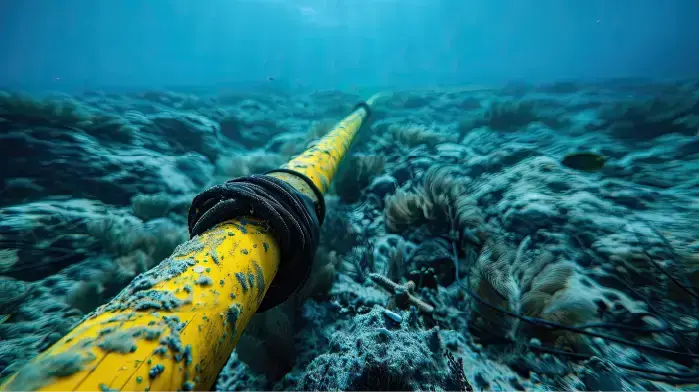
A range of integrity concerns had been identified across the asset base, including anomalous offshore free spans, displaced protective mattresses, coating damage, historical corrosion features, and internal pipeline protrusions that had impacted planned inspection activities. Conventional in-line inspection was not currently feasible for all pipelines due to operational constraints and existing pigging limitations.
The operator required a clear understanding of the significance of these issues, the potential impact on future integrity, and the actions necessary to maintain safe operation. This required the integration of historical inspection data, recent survey findings, operational information, corrosion management performance, and asset design data to develop a comprehensive integrity strategy across both offshore and onshore pipeline systems.
Our approach
A multidisciplinary integrity assessment programme was undertaken covering structural, corrosion and risk-based integrity management aspects of the pipeline network.
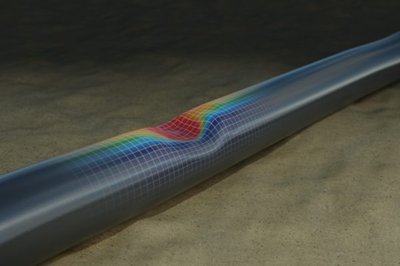
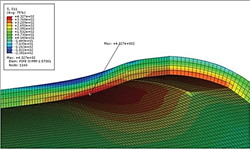
Detailed assessments were performed to evaluate the significance of offshore free spans, pipeline protection measures, corrosion-related threats, inspection constraints and long-term degradation mechanisms. Advanced engineering assessments, including finite element modelling and fitness-for-service evaluations, were used to determine the acceptability of identified anomalies and establish appropriate remediation or monitoring requirements.
Inspection strategies were reviewed for both offshore and onshore assets, considering operational limitations and the feasibility of future in-line inspection. Integrity threats were assessed using a risk-based methodology, incorporating inspection findings, operating conditions, corrosion management performance and stakeholder input to define future inspection, monitoring and mitigation requirements.
Solution
The assessment delivered a structured integrity management framework for the entire pipeline system, providing clear recommendations on remediation, monitoring, inspection frequencies and future inspection methodologies. Engineering analysis enabled the differentiation between anomalies requiring intervention and those suitable for continued monitoring, allowing integrity resources to be focused on the highest-risk areas.
Inspection strategies were developed and optimised to deliver a prioritised programme of future inspection, remediation and monitoring to support safe continued operations cognisant of asset specific constraints.
Outcome
The project provided the operator with a comprehensive understanding of the current condition of the pipeline network and a clear roadmap for future integrity management.
Key integrity threats were assessed and ranked, remediation requirements were identified where necessary, and practical inspection strategies were developed for assets where conventional inspection methods were constrained. The resulting integrity management approach improved confidence in asset condition, supported risk-informed decision making, and provided a robust basis for the continued safe operation of critical export infrastructure.
For more information, visit www.jee.co.uk/integrity-management
To contact Jee’s Technical Authority, Graham Wilson, email Graham.Wilson@jee.co.uk.



 Jee Ltd